7
→🌈
ENCODE
Give every digit a face.
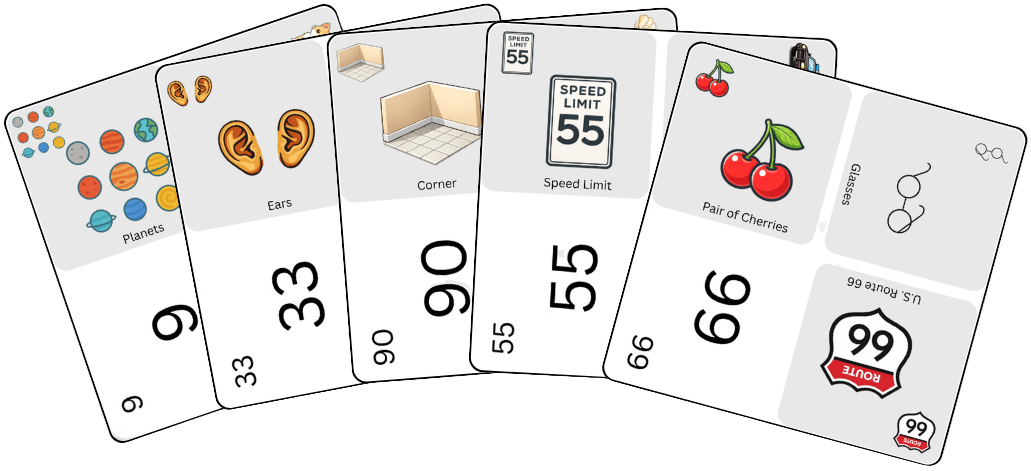
Digits become vivid peg images—turning cold information into something the visual mind can immediately recognize.
Euler's Golden Pie turns abstract digit sequences into cinematic visual stories—so memory becomes imaginative, tactile, competitive, and unforgettable.
MEMORY IS NOT STORAGE.
IT IS IMAGINATION WITH STRUCTURE.
NUMBERS BECOME IMAGES.
IMAGES BECOME STORIES.
STORIES BECOME RECALL.
THE EGP SYSTEM
Instead of forcing the brain to retain abstract symbols, EGP gives every digit a visual identity and every sequence a story structure.
ENCODE
Digits become vivid peg images—turning cold information into something the visual mind can immediately recognize.
BUILD
Players connect peg images through actions, causes, and consequences—building a narrative with momentum.
RECALL
The story becomes a retrieval path. Follow the chain, decode each cue, and rebuild the exact original sequence.
Hover or tap a phase to place it at the center of the system.
THE MEMORY VAULT
Move across the vault to reveal how abstract digits become physical, visual, and narrative landmarks.
 EGP
THE GAME EXPERIENCE
CHOOSE
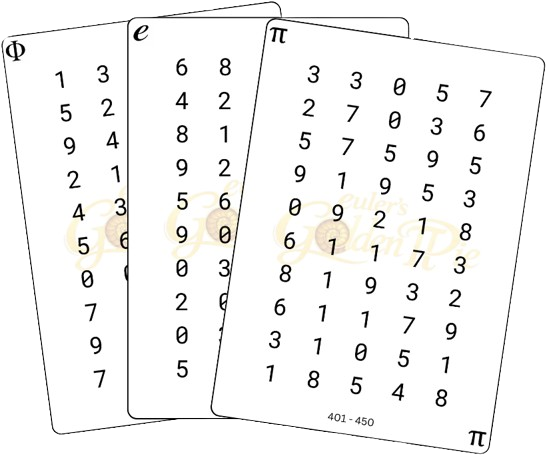
Select a digit card from π, e, or φ. The part begins with pure information.
CHOOSE
Select a digit card from π, e, or φ. The part begins with pure information.
TRANSLATE
Use peg cards to give every number a visible, memorable identity.
IMAGINE
Connect the visuals with movement, emotion, cause, and consequence.
RECONSTRUCT
Replay the story and decode each cue back into its original digit.
COMPETE
The player who recalls the longest correct sequence wins the part.
THE PHYSICAL SYSTEM
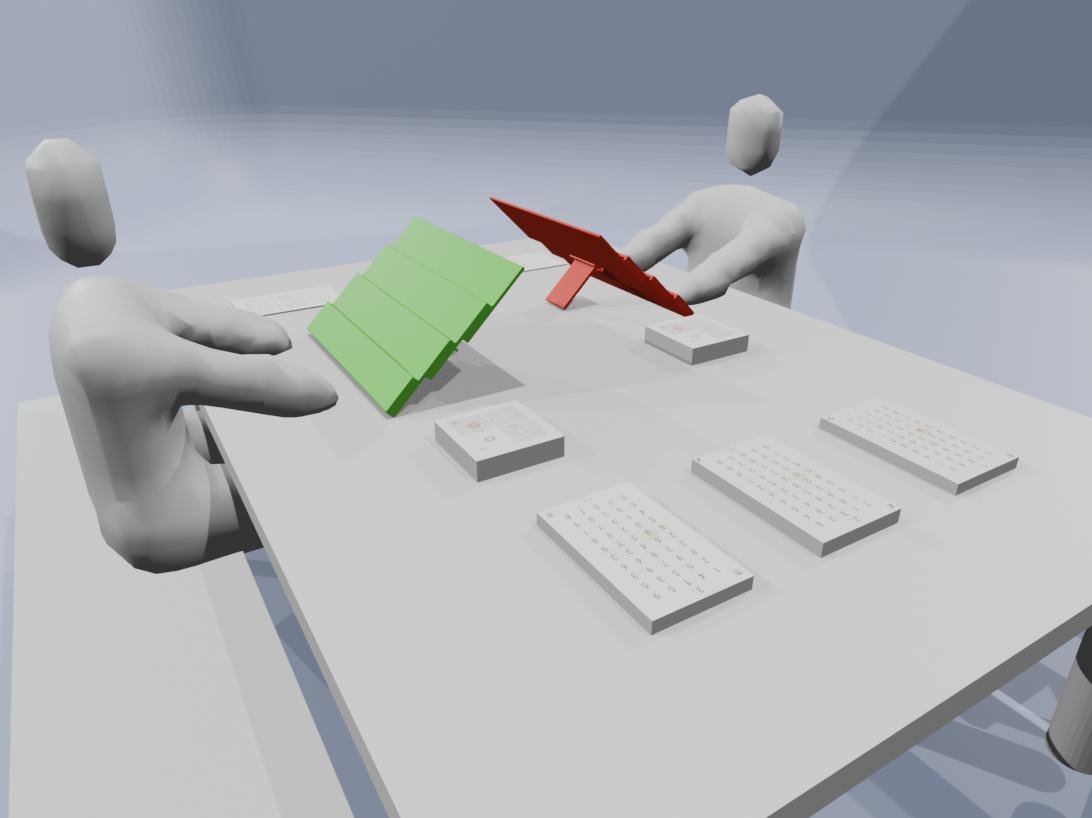
Every element gives the player a different cognitive handle: challenge, language, arrangement, and competition.
EGP-01THE CHALLENGE
Sequences based on π, e, and φ create the numerical challenge that players encode, narrate, and recall.
STORY ARCHITECTURE
Memory thrives on movement, surprise, emotion, and consequence. EGP turns those ingredients into a repeatable system.
SEE EGP IN MOTION
Watch the complete system, the physical components, and a real gameplay demonstration.
ADVANCED PLAY
Once the core loop becomes natural, players can use anchors, compression, and personal associations to move faster.
Use memorable values such as 33, 44, 55, 66, 77, 88, 99, and 100 as stable reference points.
Represent nearby values through one anchor and encode only the difference inside the story.
Familiar places, objects, and experiences produce stronger and faster retrieval cues.
One event should trigger the next. A causal story is easier to replay than a disconnected list.
QUESTIONS, ANSWERED
EGP is a memory game and learning system designed to make memorizing long number sequences faster, easier, more creative, and more enjoyable.
It combines visual encoding, storytelling, physical components, and friendly competition in one structured experience.
Players observe the digits and select peg cards that convert them into visual mnemonics.
Players connect those visual mnemonics into a meaningful, vivid, or imaginative story.
Players mentally replay the story and translate each visual cue back into the original sequence.
The player who accurately recalls the greatest number of digits while preserving the correct order.
Yes. The challenge is not remembering the cards—it is building and decoding the story effectively.
Tied players continue to the next sequence length until one player recalls more digits correctly.
EULER'S GOLDEN PIE
Visualize the digits. Build the story. Reconstruct the sequence.
Return to the beginning ↑